

Tart Cherry Juice Sleep: Dosage, Timing, and Brands I’d Actually Buy

Tart cherry juice sleep support comes down to two things: small amounts of natural melatonin plus anthocyanins that may help calm inflammation (and sore muscles) that keep you up. For a simple, practical starting point, I’d try 8–16 oz of tart cherry juice or 1–2 Tbsp concentrate diluted in water, taken 1–2 hours before bed for 7–14 nights. Overall, research looks promising but it’s not magic—think “nudge,” not “knockout.”
I first tried it during a stretch when I was training early mornings and waking up at 3 a.m. for no reason. Honestly, I expected placebo. Still, after a week, I noticed I was less wired at bedtime and my legs felt less cranky. That doesn’t prove anything, of course, but it did make me pay attention to the actual studies instead of just hype.
If you’re going to drink this regularly, a decent blender actually helps. For example, I’ve used a Ninja-style smoothie blender for years to mix concentrate with water, ice, and a squeeze of lemon (it cuts the medicinal vibe). Plus, it’s faster than shaking a jar at 10 p.m. when you’re already tired.
How does tart cherry juice affect sleep?
Here’s the mechanism in plain English. Tart cherries (usually Montmorency) contain melatonin, which is part of the body’s sleep-wake timing system. On top of that, they’re rich in polyphenols (notably anthocyanins) that may reduce oxidative stress and inflammation. As a result, some people feel both sleepier and less physically “revved up” at night.
Two big caveats matter, though. First, the melatonin amount in foods varies a lot by product and processing. Second, if your sleep problem is mostly stress, screen habits, or caffeine timing, this won’t fix it. Even so, as a low-key nutrition tweak, it’s one of the more reasonable ones.
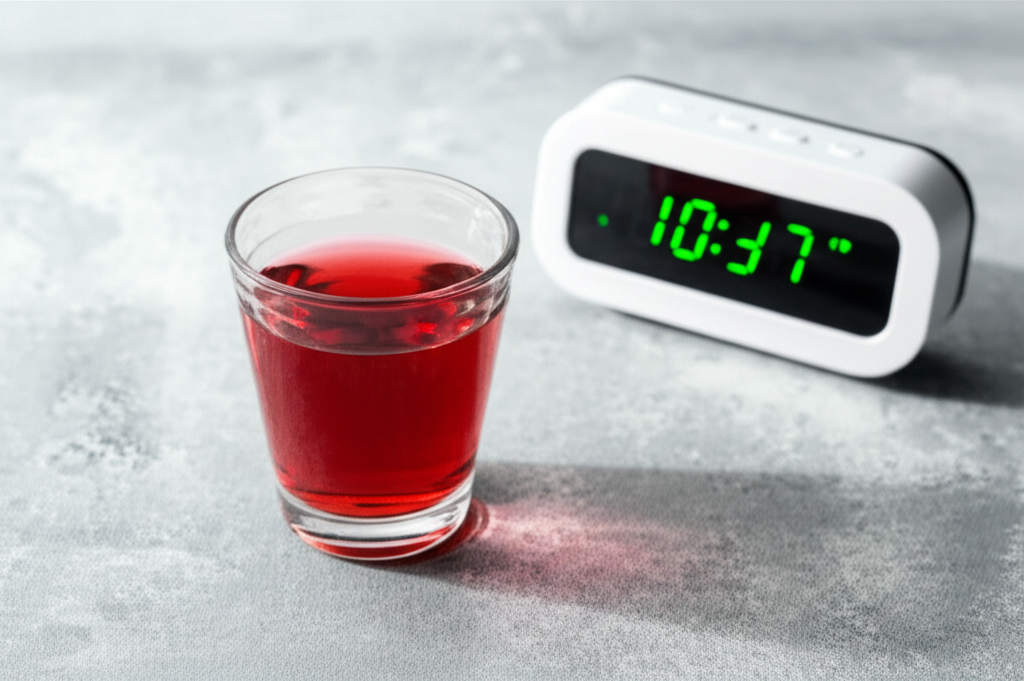

What does the research actually say about tart cherry juice sleep?
The studies aren’t perfect, but they aren’t nothing either. For instance, a small randomized trial in older adults with insomnia linked it with modest improvements in sleep measures (including total sleep time). Meanwhile, other trials (often in athletes) suggest it may help with soreness and recovery, which can indirectly help if aches keep you up.
According to the CDC, adults should get 7+ hours of sleep per night, yet 35.2% of U.S. adults report sleeping less than 7 hours in a typical 24-hour period. That’s why these “small nudges” get popular—people are trying to close a real gap. You can read the CDC background here: CDC: Sleep and Sleep Disorders Data.
And, research from the American Academy of Sleep Medicine (AASM) found that about 12% of adults reported being diagnosed with chronic insomnia in a 2022 survey. So, if you’re testing a food-based approach, you’re definitely not alone. Here’s the AASM release: AASM: Survey on insomnia.
Finally, according to a 2024 report from the American Psychiatric Association, 43% of adults said they felt more anxious than the previous year. That kind of baseline stress can wreck sleep, so it’s worth addressing habits alongside any nutrition tweak. You can review the source here: American Psychiatric Association: News Releases.
I’m not going to pretend this is a prescription sleep aid. Instead, it’s more like a gentle push in the right direction. If you respond, great. If you don’t, you aren’t “doing it wrong.”
For a bigger picture on melatonin (what it does and what affects it), I like the NIH overview: NCCIH: Melatonin—What You Need To Know. Also, if you’re curious about polyphenols and why they matter, Harvard has a solid explainer: Harvard T.H. Chan: Antioxidants. Finally, for sleep basics and healthy sleep habits, you can cross-check guidance at Sleep Foundation.
What dosage should you try for better sleep?
Dosage is where most people get stuck, so I’ll keep this simple. In most human studies, researchers use either a straight juice amount (in ounces) or a concentrate amount (in tablespoons) diluted in water.
- Juice (not concentrate): Start with 8 oz in the evening. Then, if you tolerate it well, move to 16 oz/day total (either all at night or split AM/PM).
- Concentrate: Start with 1 Tbsp in 8–12 oz water. Next, many people use 1–2 Tbsp once daily, or 1 Tbsp twice daily.
- Capsules: Follow the label, because extracts vary wildly. Also, look for a product that clearly states the extract ratio or polyphenol/anthocyanin content. If it doesn’t, I usually skip it.
Personally, I’d rather adjust by ounces and tablespoons than chase “mg of melatonin” because you rarely get reliable melatonin numbers on juice labels. On top of that, you’re also after the polyphenols.
When should you drink it: morning or evening?
If your goal is sleep, evening is the obvious starting point. Specifically, take it 1–2 hours before bedtime. That window gives you time to digest it and avoid waking up to pee at 2 a.m. (Ask me how I know.)
However, there’s a split approach some people like:
- Split dose (AM + PM): This is common in research protocols. As a result, it may help with recovery and inflammation throughout the day, and you still get a pre-bed serving.
- Only evening: Easier compliance. Plus, fewer calories and less sugar overall.
If you’re sensitive to sugar or you’re watching calories, concentrate diluted in water is usually the cleaner move. What’s more, you can keep the serving smaller and still get the “tart cherry” punch.
Juice vs concentrate vs capsules: which should you choose?
I’ve rotated through all three, and each has its place. Ultimately, the “best” option is the one you’ll actually use consistently without annoying side effects.
Choose juice if you want the simplest routine
Open bottle, pour, done. And, it’s easy to dial up or down by ounces. The downside is sugar and fridge space. Also, some brands taste like cough syrup. Not all, but enough.
Choose concentrate if you want control (my preference)
Concentrate is flexible. For example, you can dilute it, mix it into sparkling water, or blend it into a nighttime smoothie. It’s also travel-friendly. As a result, it tends to be the easiest way to keep the habit without adding a ton of liquid volume.
Choose capsules if you can’t do the taste or sugar
Capsules avoid sugar and taste issues. However, quality varies more, and some products are vague about what’s inside. So, if you go this route, insist on clear labeling and third-party testing.

What should you look for in a quality brand?
If you’re standing in a grocery aisle (or scrolling at midnight), these are the checks I use. In practice, they’ll save you money and disappointment.
- Cherry type listed: Look for Montmorency tart cherries. If it’s ambiguous, I move on.
- “Not from concentrate” vs concentrate clarity: Either is fine, but it should be obvious what you’re buying.
- No weird blends: Some bottles mix apple or grape juice to sweeten it. That’s not “bad,” but it changes sugar and potency.
- Minimal ingredients: Ideally just tart cherry juice (and maybe water). Fewer additives usually means fewer surprises.
- Third-party testing: Notably helpful for capsules. Look for NSF, USP, or another credible lab verification.
- Storage and freshness: Juice oxidizes. Therefore, check “pressed on” dates when available and keep it refrigerated after opening.
Side effects, interactions, and who should be careful
Most people tolerate it well. Still, a few issues show up in real life:
- GI upset: Start small if you’ve got a sensitive stomach.
- Extra bathroom trips: Too much fluid too close to bed can backfire.
- Blood sugar considerations: If you’re managing diabetes or prediabetes, choose concentrate diluted in water and keep servings modest.
- Medications: If you’re on blood thinners, blood pressure meds, or have kidney concerns, ask your clinician first. It’s a food, yes, but food can still interact.
Also, if your insomnia is severe, long-lasting, or paired with loud snoring or choking/gasping, get checked for sleep apnea. That’s a different problem, and this won’t touch it.
A quick “try it for 10 days” plan (so you’re not guessing)
If you want a structured experiment, here’s what I’d do. It’s simple, and it gives you a clear yes/no.
- Days 1–3: 8 oz juice (or 1 Tbsp concentrate) 90 minutes before bed.
- Days 4–10: If you’re tolerating it, move to 16 oz/day total (split AM/PM) or keep the evening-only dose if you prefer fewer calories.
- Track two things: time to fall asleep and how many times you wake up. That’s it.
Don’t change five other habits at the same time, or you won’t know what helped. Meanwhile, keep caffeine cut-off consistent (I do noon, but you do you).
Summary: This approach is plausible, especially if you’re dealing with mild insomnia or soreness that keeps you awake. Start with 8 oz (or 1 Tbsp concentrate) 1–2 hours before bed, then adjust based on how you feel. Finally, choose brands that clearly state Montmorency tart cherries and keep ingredients simple.
You Might Also Like
